BOOKS
I have provided links to Amazon for these books, but I’m not suggesting that you need to buy from them. Unlikely many websites, I do not have a financial arrangement with Amazon. I do NOT get money if you buy from Amazon. I provide the links so you can easily find out more about the books.
The first place to look for any of these books is your local library. If they don’t own the book, they can often get it from another library through Inter-Library Loan. It’s usually free.
If you do decide to buy from Amazon, consider getting the Kindle edition. These are cheaper. You don’t have to buy a Kindle device to read Kindle books. You can download Kindle apps from Amazon to read on your PC or other device. https://www.amazon.com/gp/help/customer/display.html?nodeId=200783640
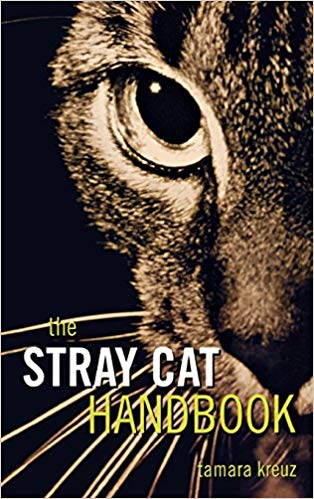
here is a link to this book
The Stray Cat Handbook
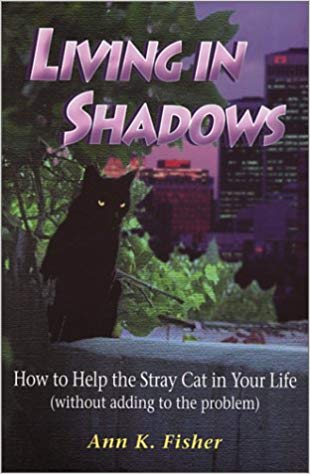
Living in Shadows: How to Help the Stray Cat in Your Life (Without Adding To the Problem)
Taming the Feral Cat is a step-by-step illustrated guide to helping and socializing the feral cat too wild to be handled. When Trap-Neuter-Release is not an option, and a feral must be brought in for health or safety issues, this is the book you need.
You’re better off caring for most ferals outside until they want to come in, but if the colony is going to be bulldozed, that’s not an option. Introducing them into another feral colony usually leads to violence. Catching them, caging them, and keeping them until its safe for them to either return to the wild or they decide to become pets is sometimes the best option.
MEDICAL CARE
Hacking Feline Asthma
I wish that I had this book when Honey was diagnosed with asthma. A link to a video showing how to use an inhaler is embedded in the Kindle version. If your cat is constantly hacking, as if trying to bring up a hairball that never comes up, have her checked for asthma. It is easily manageable, once you know what the problem is. The Kindle version is very inexpensive. Hacking Feline Asthma is also available in print and audio versions.
NOTE: You don’t have to buy a Kindle device to read Kindle books. You can download Kindle apps from Amazon to read on your PC or other device. https://www.amazon.com/gp/help/customer/display.html?nodeId=200783640
The Secrets of a Vet Tech I and II books offer both money-saving tips on caring for your pets and useful insight into veterinary practices and tests.
Many flea-control and other products are available at significant savings in the livestock section. The small packages marketed for companion animals and the larger sizes for livestock are the same concentration. Farris tells specific brands that you can find at Tractor Supply or on the web. She tells you what dosage, according to their weight, to use for your pets . Antibiotics sold for aquarium use are available in the same quality and dosage as for mammals, but cheaper and without a prescription.
Most vaccines are available for home administration. Farris lists the new regimen of less frequent vaccinations now recommended for dogs and cats. The immunity lasts longer than previously believed, and less frequent vaccination lowers the risk of serious side effects. (Depending on local law, you may need to have the rabies vaccine administered by a licensed veterinarian yearly.)
While offering advice that will help you avoid unnecessary vet expenses, Farris stresses the importance of an annual checkup with the vet to catch problems before they become major issues. She also emphasizes the importance of good dental health.
The author provides good information on food. There are plans for building inexpensive outdoor shelters, a drinking fountain, and an insulated water bowl. Farris provides information for caring for birds, small mammals, and reptiles, as well as cats and dogs.
Farris provides more detailed first aid information than is usually given in animal care books. There are step-by-step directions on how to drain an abscess, for example.
If you have animals, these books belongs on your bookshelf next to Where There is No Doctor/Dentist and Improvised Medicine. It does not replace professional veterinary care, but it will make you a better consumer of veterinary services and products. And if you can’t get to a vet, either because of poverty or disaster, this book could be a lifesaver.
Where There is No Pet Doctor
LaVigne, a veterinarian and cruising sailor, has written an emergency care manual for cats and dogs that goes far beyond most pet first aid manuals. This is the book to have when your vet is not a short drive away.
There is plenty of information on prevention, emergency treatment, and chronic conditions. The book is well-illustrated, but it is well worth buying LaVigne’s DVDs. There are separate DVDs for cats and for dogs. When I needed to give my cats James and Max subcutaneous fluids, I was trained by my vet. It still would have been handy to have LaVigne’s cat video for reinforcement.
This book is comparable to the Where there is No Doctor and Where there is No Dentist books for humans.
NOTE: There are two books with similar titles: Where There is No Animal Doctor and Where There is No Veterinarian. These are very good books, but they are for farmers. They cover livestock, poultry, camels, etc., but not cats or dogs.
OTHER BOOKS

Bonzo’s War is an interesting book on the effect of war on the animal population of Britain during the Second World War. It is an important book for pet owners and policy makers because of its account of the hysteria that led to the voluntary destruction of over half a million cats and dogs in the first weeks of the war. These animals were killed by their loving owners, not a despotic government, for no valid reason.
An uninformed and hysterical official of the Ministry of Home Security warned Britons to euthanize their pets before the Germans started dropping tons of poison gas and incendiaries on British cities. It would save their pets from a horrible death. And if their pets did survive the aerial onslaught, they’d just starve to death anyway. Amazingly, the BBC actively promoted this view. So did most animal ‘protection’ charities. Jumping on the patriotic bandwagon brought them increased funding for the ‘humane’ destruction of healthy animals.
The hysteria built, and the deaths continued, despite opposition from most of the British government. The Ministry of Agriculture knew that farmers would need dogs to herd sheep and protect poultry from predators, as well as cats to protect crops, granaries and warehouses from rodents. The Ministry of Health feared the spread of rodent-borne disease in bomb-damaged cities devoid of cats. The Ministry of Defence knew that civilian dogs would be needed to breed guard dogs and other military dogs. The hysteria lessened during the Phony War, but arose again during the invasion scare after Dunkirk and again during the Blitz.
With most people today getting their news from cable TV or social media, the danger of this sort of hysteria is greater than in 1939. The BBC couldn’t approach the subject objectively or take the time to check with competent government agencies. Do we think today’s talking heads or bloggers would do better?
In 2006, one cat in Germany died of avian flu. Across Europe, thousands of cats were abandoned or turned into animal shelters. Only three other cats were found to have the disease, and there were no cases of transmission to humans. Pet owners and policy makers need to be prepared to deal with this sort of hysteria in the event of pandemic or war.
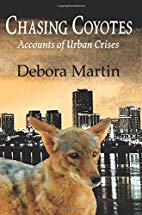
Chasing Coyotes is for you If you are concerned about protecting your pets from encroaching urban coyotes. There is much misinformation being circulated asserting that coyotes are benign neighbors. If this was ever true, the habituation of coyotes to human presence has changed all that. Our pets are fine prey for them. Increasingly, coyotes are attacking children and even adults. Many animal rights groups deny that this has ever happened, but Martin provides extension documentation of numerous incidents. The book is well-documented with references.
Chasing Coyotes is a call to arms, but more importantly, it is full of practical advice.
- How to protect your pets
- How to safely harass coyotes so they will avoid humans
- Make your property unattractive to coyotes
- Fencing that works
- How coyotes move through human areas
- How to organize your neighbors
- Getting politicians and law enforcement to take the issue seriously
- How to tell a coyote from a stray dog
- The importance of having an online presence for your group
- The need to protect your website from animal rights hackers
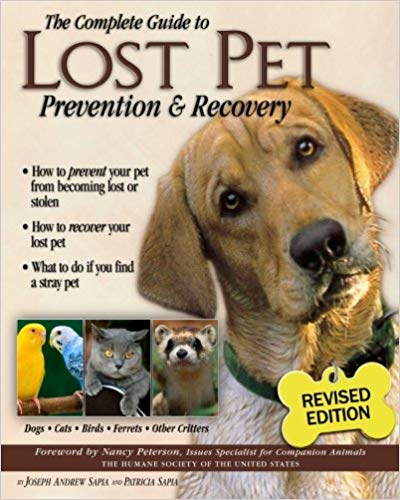
The Complete Guide to Lost Pet Prevention & Recovery
Jason Hribal’s Fear of the Animal Planet is a must read for people interested in animal welfare. Abuses and the unsatisfactory living conditions in zoos, ocean parks, and circuses are well-known. What sets Fear of the Animal Planet apart is its attempt to present the animal’s viewpoint. Escapes and attacks on humans by imprisoned higher animals (felines, primates, elephants, marine mammals) are usually dismissed as wild animals striking out due to pain or stress. Hribal makes an excellent case that these are reasoned attempts at escape, self-defense, or vengeance.
A decade ago, I would have sympathized with Hribal’s position, but felt he was being way too anthropomorphic. I have since spent much time working with ‘feral’ cats, and have come to understand that they think rationally. Animals not only have emotional lives, they have an intellectual life. They make decisions based on observation and thought. They think and plan differently than we do, but they do think and plan.
On several occasions, cats that I have fed for years, with little contact, have sought me out when they had been badly injured. I don’t believe that they instinctively sought human help. They had observed me for years, and seen me help other cats. They made a conscious decision to risk approaching me when unable to help themselves. So, it’s not difficult for me to accept Hribal’s view that resistance and escape are decisions made by intelligent animals. His arguments are persuasive. Give this book a read, and you may be persuaded as well.
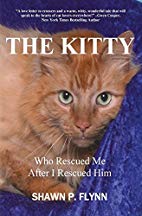
The Kitty is a heartfelt memorial to a stray cat who changed the author’s life. I enjoyed the book immensely, since it mirrored some of my experiences with cats. This book will be enjoyed by all cat lovers. It would make a great gift for anyone who loves cats.
Spirit of the Road provides an interesting travelogue of less traveled parts of America, while providing plenty of insight into the trucking industry and a trucker’s life. Cat lovers will enjoy the stories of Kitty, Huffman’s feline traveling companion. I enjoyed reading this, and I’m looking forward to Huffman’s first novel The Road to Vermont .
Stolen for Profit is out-of-date now, but this is the only book that I know of that deals with this important issue. Pet theft is an increasing problem, and most thieves aren't looking for a pet of their own. I didn't think that there would be much of a market for stolen animals, but there is. After reading this, you will be wary of leaving your animals unattended.
Who will care for your animals after your death? If you are fortunate, family or friends will do so. The specifics should be part of your estate planning; you should not take anything for granted. People may not be able or willing to take on the responsibility for your pets.
After the death of an owner, beloved pets may be dumped at a shelter or tossed out of the house or even euthanized. Old cats that have only known one home and one owner, wind up sitting in a cage, bewildered and depressed. When someone comes to the shelter looking for a pet, they are going to adopt the young, outgoing cat, not the depressed animal sitting in the back of her cage. If it is not a no-kill shelter, the feline survivor will soon be euthanized.
To avoid this, you need to plan. If you are lucky, you’ll just need to discuss this with your family and friends. You probably should include a provision in your will. If you don’t have people that you can depend on to take care of your animals, you may need to set up a trust or make other complicated arrangements. Most states have specific statues for establishing a Pet Trust.
Besides your companion animals, don’t forget any other animals that depend on you: horses, livestock and any other farm or domestic animals. If you have stray cats that you feed, try to find someone to help you who will continue when you are gone. The same goes for birds who need your feeders to get through the winter.
You cannot just leave money or anything else to your pets. Animals are not ‘persons’ legally. Only humans or corporations can inherit directly. And no matter how much money they have, they’ll need people to spend it for them.
If you leave money to a dog, you will be considered crazy (or eccentric, if you were rich enough). Anyone who challenges your wishes in court will succeed. On the other hand, if you leave a reasonable amount of money to a person or to a trust to care for your animals, you will be considered a responsible individual and your wishes will be upheld.
This book is over a decade old now, so it cannot be depended on for specific legal information. Since you will need to use an attorney to make specific arrangements, this really isn’t a drawback. This book’s utility is in shining light on an often overlooked facet of estate planning. Nobody likes to plan for their death, and it is easy to overlook your pets.
FICTION
Sandi Ward’s The Astonishing Thing is a well-written story of a family in crisis. The story unfolds from the point of view of Boo, the family cat. Boo’s efforts to understand what is going on will fascinate cat lovers. Ward offers insights into how cats may view the world. Ward has also wrote Something Worth Saving, which is also from the family cat’s point of view (and something worth reading).
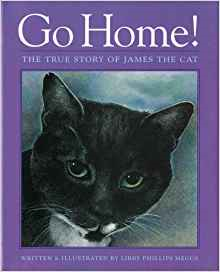
James of the Comstock Crew was named after the cat in this book. James was a library cat at the time, and the kids named him. The physical resemblance is great, and their lives were similar. This is a picture book, but cat lovers of all ages will enjoy it.
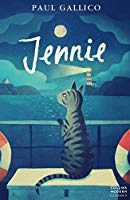
Jennie is the story of Paul, a young boy who loves cats. After an accident, he awakens as a cat. Jennie is the stray cat who teaches him to survive as a cat. A well-written and engrossing fantasy, told from a cat’s point of view, it is very illustrative of the dangers faced by stray cats. The first US edition was titled Abandoned.
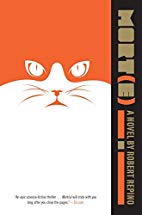
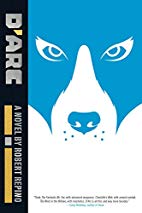
I stumbled onto Mort(e) at my local library, attracted by the striking cover portrait of Mort(e). Animals are transformed into speaking creatures with opposable thumbs, and a war with humans results (The War with No Name). Both humans and animals are portrayed in a very realistic manner. Repino understands cats and soldiers despite, apparently, being neither.
I usually prefer hard science fiction, where the science and tech are made believable. Repino doesn’t bother much with that part of the story, but his storytelling and characters made this a memorable read.
Sebastian is a neutered and declawed housecat when the Change occurs. Despite his disabilities, his exploits lead to him becoming known as Sebastian the Warrior. He becomes a special ops trooper with the Red Sphinx, an all feline unit. This is a perfect touch. If I were recruiting intelligent animal commandos, I know two feral cat colonies where I would start. Sebastian adopts the nom de guerre Mort(e), illustrating both his sardonic sense of humor and erudition, and Repino’s playful use of French.
Mort(e) is the best feline character in fiction. Mort(e)’s story continues in D’Arc , and they should be read in order. Culdesac is a novella that should be read after Mort(e), but not necessarily before D’Arc.
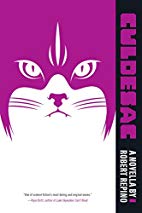
Culdesac is the bobcat who commands Red Sphinx. Mort(e) is only a minor character in this work, but Nox is the second best feline character in fiction. Don’t miss her.

Mort(e)
World Without Cats is a well-written medical thriller with a twist: the deadly pandemic threatens to wipe out felines, not humans. As the disease, a combination of FeLv and Ebola, spreads, the world’s population of cats plummets. Unexpected problems ensue, including the spread of deadly rodent and avian diseases. Besides a medical thriller, this is a horror story for cat lovers and illustrates how important cats are to the ecosystem.
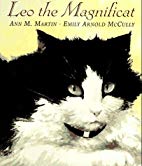
Leo the Magnificat is the fictionalized story of a real cat. Leo was the church cat at Christ Church Episcopal Cathedral in Louisville, Kentucky.
Leo is a well-illustrated and nicely told story that will be enjoyed by all cat lovers, adults or children. It is a fitting tribute to a well-loved cat.